The contribution by Nataša Zupanc presents a case study on the development of biodegradable polymer blends for use in the pet industry, with a focus on dog toys. The research addresses the preparation and characterization of polymer blends based on polylactic acid (PLA), polyvinyl alcohol (PVA), and starch, and evaluates their potential for industrial application.
Introduction
The pet product industry represents a rapidly growing market and, at the same time, a significant source of plastic waste. Dog toys typically have a short service life and are mostly made from non-renewable, poorly recyclable polymers. In addition to environmental considerations, safety criteria are also crucial, as unsuitable materials may cause mechanical injuries or ingestion of particles.
Due to increasing environmental awareness, there is a growing need for sustainable materials that simultaneously meet the functional requirements of animal products. The aim of the study was to develop and evaluate a biopolymer blend based on PLA, PVA, and starch suitable for manufacturing dog toys that enables industrial processing while exhibiting adequate mechanical properties and improved environmental acceptability.
Experimental Part
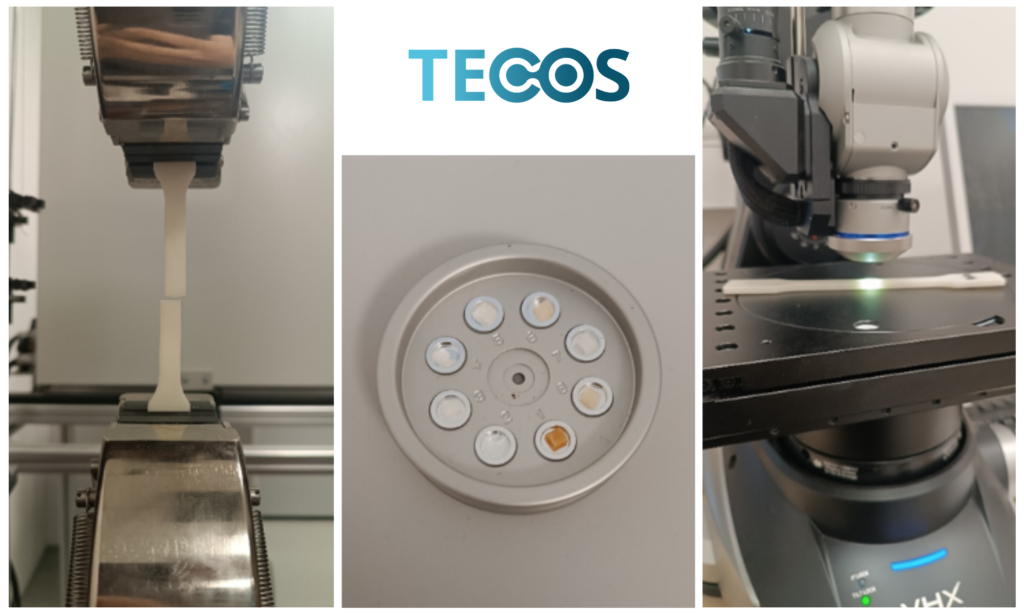
Polymer blends with different PLA and PVA ratios were prepared by extrusion compounding using a twin-screw extruder (Useon LAB-30) and then injection-molded into standardized test specimens on a Fanuc Roboshot α-S50iA/330/IT machine according to ISO 527-1. Tensile testing was performed on a Beiyue WDW-10 testing machine according to ISO 527-1 and ISO 527-2. Based on these results, the blend with the best mechanical properties and optimal processing behavior during extrusion and injection molding was selected.
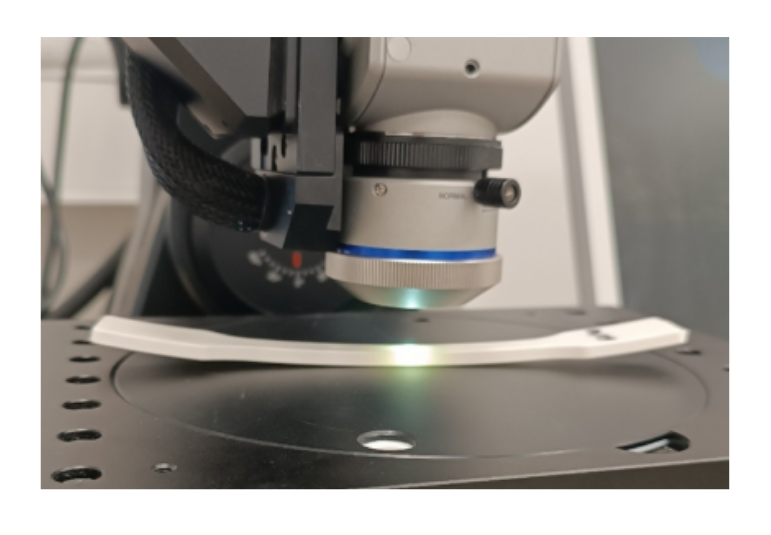
Starch was then added to the selected polymer blend in different weight fractions. Mechanical, thermal, chemical, and morphological analyses were carried out. Mechanical properties were determined by tensile testing, thermal properties by differential scanning calorimetry (DSC) using a Mettler Toledo DSC 2 calorimeter, chemical composition by FTIR spectroscopy using a Perkin Elmer Spectrum 65 spectrometer, and morphology by optical and scanning electron microscopy (SEM) using a Keyence VHX 7000 microscope and a FEI Quanta 250 SEM.
To simulate real usage conditions, an artificial dog saliva test was also performed to evaluate changes in mass, color, and surface structure of the materials.
Results and Discussion
Mechanical properties
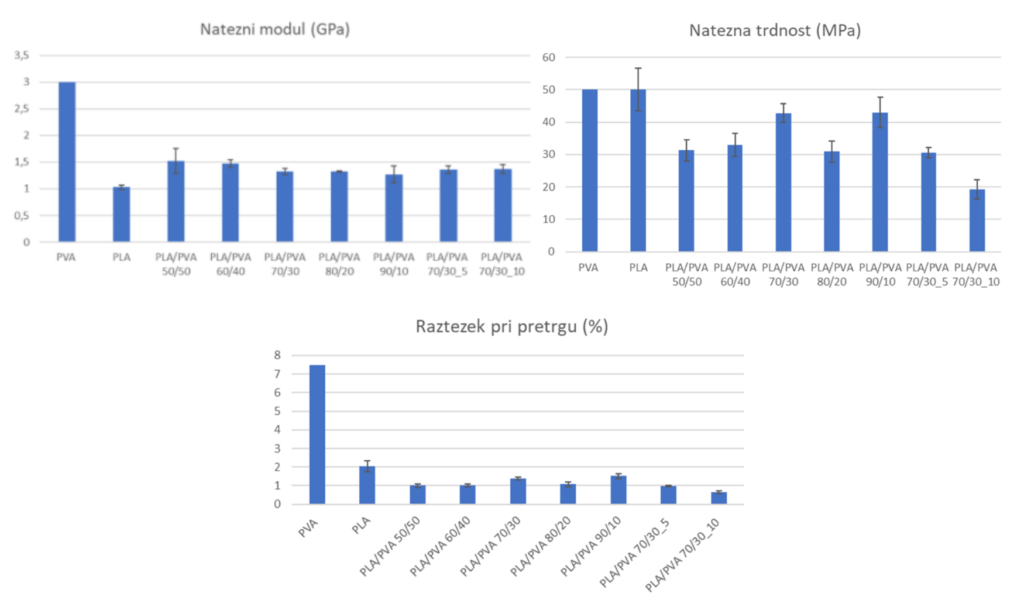
Tensile test results show that the addition of PVA to polymer blends increases the tensile modulus of PLA. Material stiffness increases with increasing PVA content and reaches its highest value at a PLA/PVA ratio of 50/50. The addition of starch slightly increases the tensile modulus, but its effect is less pronounced than that of PVA, confirming that the PVA fraction plays a key role in determining stiffness.
Conversely, the addition of PVA and starch leads to a decrease in tensile strength and elongation at break. A higher PLA content contributes to higher tensile strength, while increased starch content further reduces the strength and elasticity of composite blends. Overall, the results confirm that PVA improves stiffness but negatively affects strength and elongation properties, and starch further amplifies these trends.
Thermal properties
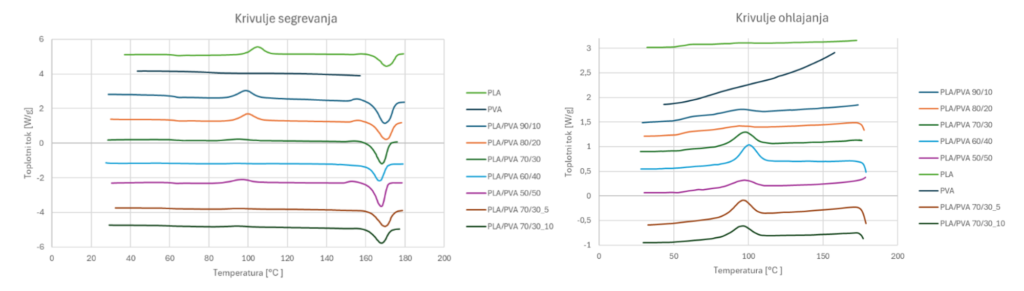
DSC analysis shows that the thermal properties of pure PLA and PVA are consistent with literature data. The glass transition temperature of the polymer and composite blends is comparable to or slightly lower than that of pure PLA, indicating that the presence of PVA and starch does not significantly affect the segmental mobility of PLA chains.
The presence of cold crystallization in most blends indicates the fraction of amorphous PLA segments that crystallize during heating, while lower cold crystallization temperatures suggest reduced crystallinity. The most pronounced changes in Tg and Tcc were observed in samples with higher starch content, indicating that starch lowers both the glass transition and cold crystallization temperatures. The decrease in melting temperature in the blends can be attributed to the higher PVA fraction, which restricts crystal growth and thus reduces Tm.
FTIR analysis
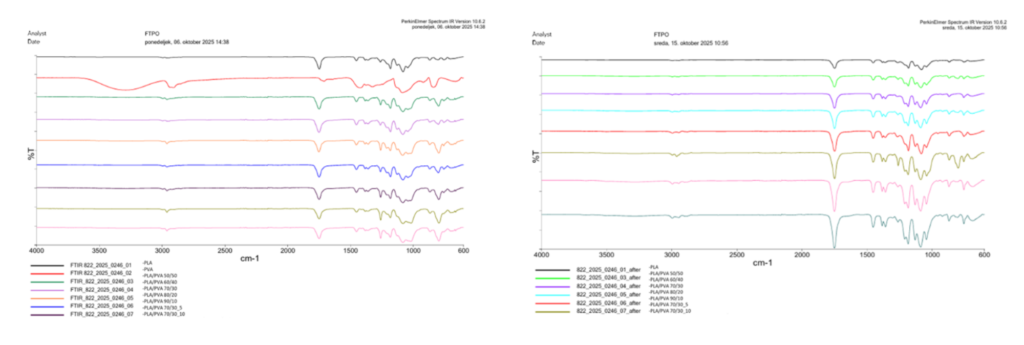
FTIR analysis confirmed the presence of characteristic functional groups of PLA and PVA in the blends, with all detected peaks consistent with literature data. Comparison of FTIR spectra before and after exposure to artificial saliva showed no major changes in chemical structure, although minor variations in peak intensity were observed, especially in the carbonyl group and C-O-C bond regions. These changes indicate mild surface modifications or possible partial degradation of the surface layer.
In blends with higher PVA content, intensity changes were more pronounced, indicating greater sensitivity of PVA to the selected environment. The addition of starch did not introduce new peaks but caused changes in intensity around 800 cm⁻¹, associated with starch components. Despite observed differences, all samples retained characteristic functional groups, confirming chemical stability even after exposure to artificial saliva.
Morphology
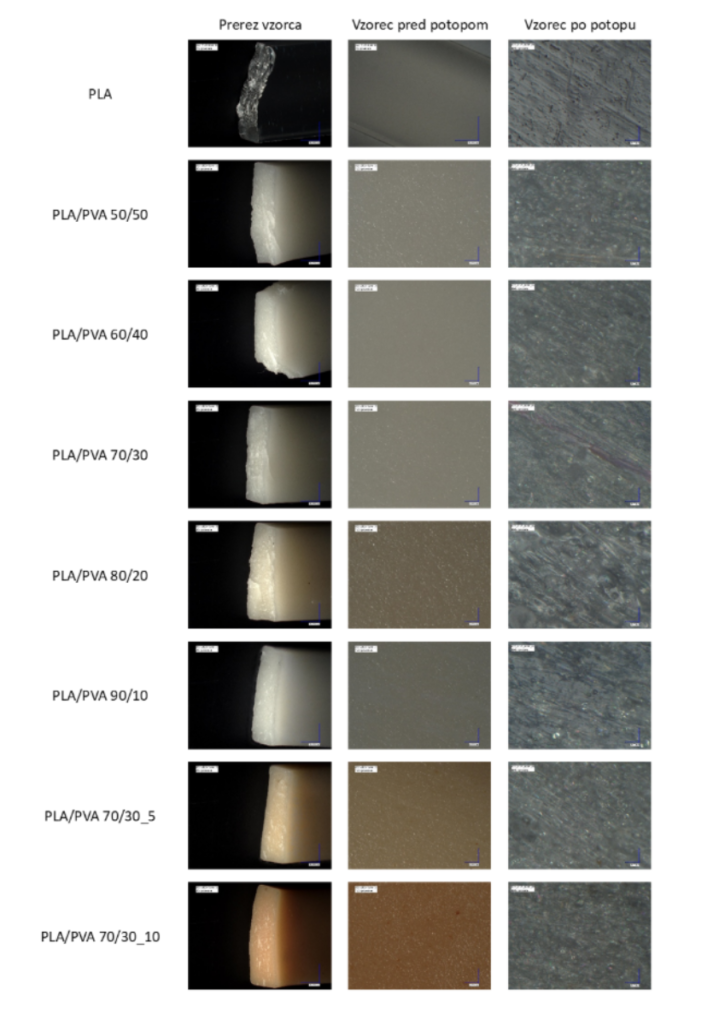
Optical microscopy showed that pure PLA has a homogeneous and smooth internal and surface structure, while PLA/PVA blends exhibit increased roughness and irregularity, indicating limited compatibility between components. The addition of starch further increases heterogeneity, visible in uneven cross-sections and differences in surface color tones, confirming non-uniform dispersion of starch in the polymer matrix.
After immersion in artificial saliva, similar changes in surface morphology were observed in all samples regardless of PLA/PVA ratio. A thin mineral layer formed on the surface, increasing roughness and potentially affecting surface and adhesion properties.
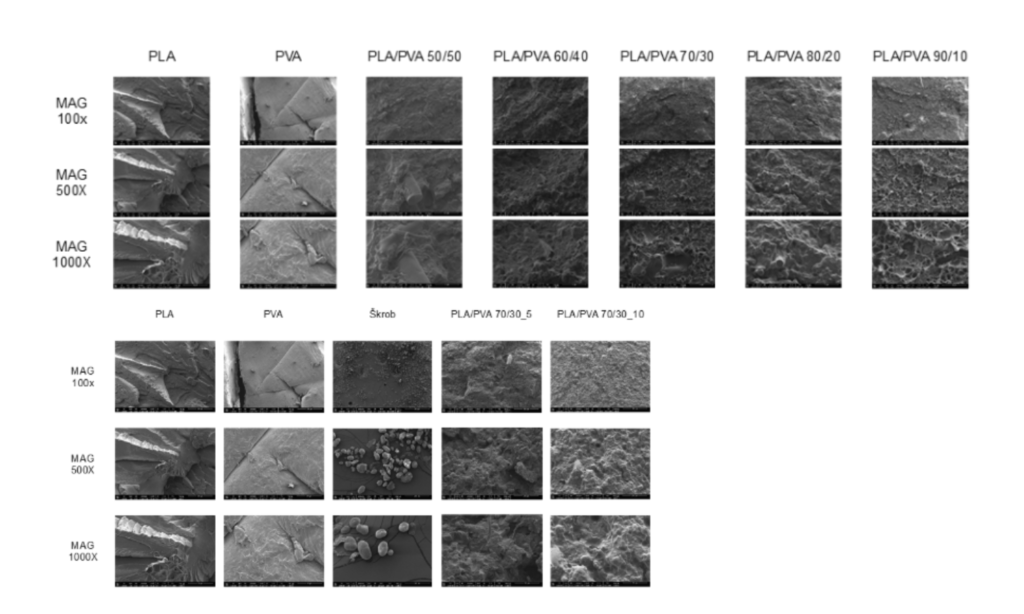
SEM analysis confirmed heterogeneous morphology of polymer blends resulting from limited interfacial adhesion between PLA and PVA. The PLA/PVA 50/50 blend showed a strongly uneven structure, while the 60/40 ratio exhibited slightly better component dispersion. Increasing PLA content led to increased porosity, indicating more pronounced phase separation.
In starch-containing composite blends, spherical starch granules and a coarse surface were clearly visible, confirming incomplete dispersion of starch in the polymer matrix. Higher starch fractions further increased roughness and heterogeneity, which may negatively affect mechanical properties. The results highlight the need for compatibilizers or starch modification to improve homogeneity and stability of composite blends.
Artificial saliva exposure
Exposure to artificial dog saliva caused an increase in sample mass, color changes, and increased surface roughness. Pure PLA showed the lowest absorption, consistent with its low hygroscopicity, while blends with higher PVA content and especially those containing starch exhibited significantly greater absorption. The highest absorption occurred in the composite blend with 10 wt.% starch, confirming that starch strongly increases liquid uptake.
After one week of exposure, a slight increase in saliva pH was detected, suggesting initial chemical interactions or possible early degradation of PVA and starch.
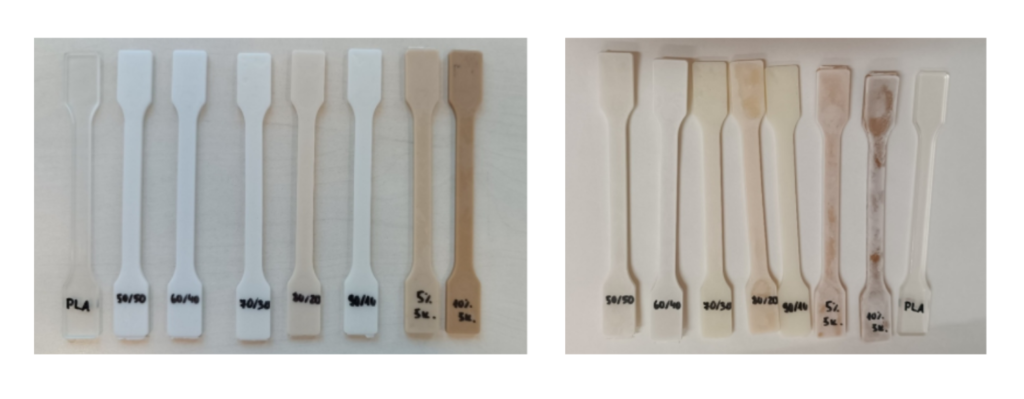
Visual inspection after immersion revealed warping, especially in more hygroscopic blends, and color changes likely due to liquid absorption and possible mineral deposition on the surface. Overall, the results confirm that increasing PVA and starch content increases hygroscopicity, which may affect long-term mechanical stability and usability in humid environments.
Conclusion
This work investigated biopolymer blends based on PLA, PVA, and starch in terms of their mechanical, thermal, chemical, and morphological properties as well as their behavior in artificial dog saliva. The results showed that adding PVA increases stiffness but reduces tensile strength and elasticity, while starch further increases stiffness but worsens mechanical performance due to limited compatibility between components. Thermal properties remain comparable to pure PLA, indicating a negligible effect of additives on chain segment mobility.
Morphological and spectroscopic analyses confirmed system heterogeneity and limited starch dispersion, while exposure to artificial saliva caused liquid absorption, surface changes, and layer formation, with more pronounced effects at higher PVA and starch contents.
The contribution provides a basis for further research into compatibilization of biopolymer blends and for the development of safer and more environmentally friendly products.